How a Retired Family Counsellor Helped Me Finally Name the Silent Pain I Had Been Carrying for Seven Years — and What Happened After I Did
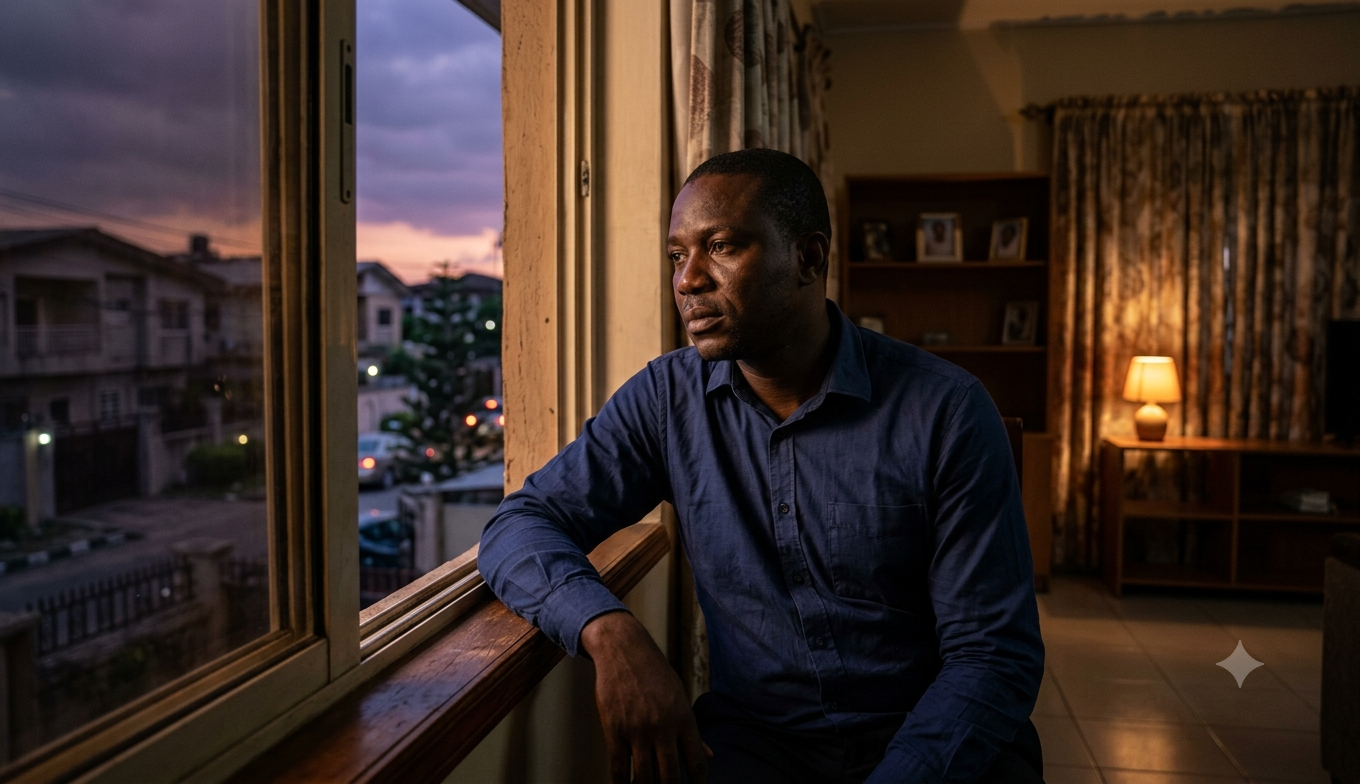
If you are a husband who wakes up every morning and the first thing you feel is not love — but duty — read every word on this page.
If you provide. You protect. You show up. You pay the bills, attend the school events, fix what is broken, and carry what is heavy.
And yet somehow — you are invisible.
Nobody asks how you are doing. Not really. Not in the way that actually waits for an honest answer.
Your wife sees the results of your effort. She does not see you. Your children love you — but they love what you do, not what you feel.
When was the last time someone in that house looked you in the eye and said: I see you. I know you are tired. I know you are carrying something.
You cannot remember.
And you have started to wonder — quietly, in the hours when the house is asleep and it is just you and the ceiling — whether the marriage is real anymore. Or whether it is just a structure. A company you both work for. With children as the only product that matters.
You stay. Because of them. Because leaving would shatter what they know. Because you are not the kind of man who walks away from his responsibility.
But staying is costing you something you cannot name yet.
You are not unhappy enough to leave. But you are not happy enough to feel alive.
And that space — that grey, exhausted, invisible space — is where you have been living for months. Maybe years.
You have tried to talk about it. Once. Maybe twice. It did not go the way you hoped. So you stopped trying and started managing. Becoming efficient at the performance of a marriage without the substance of one.
Is this just what marriage becomes? Is this what everyone is secretly feeling and nobody says out loud?
If this is where you are right now — drop everything you are doing and read every word I am about to say.
"I know. Because I watched someone I love carry this exact weight for years — and I almost missed it entirely."

My name is Chichi.
I am not a therapist. Not a marriage counsellor. Not a licensed psychologist.
I am a woman who spent years watching the man closest to her disappear — not physically, but in every way that mattered — and had no language for what was happening until it was almost too late.
I grew up in Enugu. I am the kind of person who notices things. I notice when a person's laughter sounds rehearsed. I notice when someone answers "I'm fine" too quickly. I notice the subtle exhaustion behind a well-maintained composure.
And for years, I noticed it in him.
He was my brother-in-law. Emmanuel. One of the most decent men I have ever known. He provided everything. He never raised his voice. He showed up to every school event with a smile. He fixed what was broken and paid what was owed.
But behind closed doors — and I could see it, even when nobody else could — he was hollowed out.
He had stopped expecting anything from his marriage. Not connection. Not understanding. Not even the simple relief of being known by another person.
He had become a function. A role. The Invisible Husband.
He stayed because of his three children. Full stop. That was the sentence I heard him say once, quietly, when he did not know I was listening.
"If not for these children, I would have been gone a long time ago."
Those words sat in me for a very long time.
Not because they were dramatic. But because they were said so calmly. So matter-of-factly. As if it were simply the weather.
That is what scared me most. The resignation. The way a man can decide to disappear inside his own life and just... continue.
It was an ordinary Saturday afternoon. The kind that looks fine from the outside.
Emmanuel had come to drop off something for my husband. I offered him tea. He sat down at the kitchen table the way a man sits when he has nowhere urgent to be — but also nowhere he truly wants to go.
We talked about nothing important for a while. The children. Traffic on the expressway. The price of things. Safe topics.
And then there was a pause.
Not an awkward pause. A heavy one. The kind that carries something unsaid inside it.
I looked at him properly for the first time that afternoon. He was well dressed. Clean. His phone had been buzzing quietly the whole time — probably work, probably something that needed attending to. He was, by every visible measure, a man who had his life together.
But his eyes were somewhere else entirely.
"Emmanuel," I said quietly. "How are you? Not the normal answer. How are you really?"
He was quiet for a long moment. Then he looked at his cup of tea. Then at the wall.
"I am tired, Chichi," he said. "Not the kind of tired that sleep fixes. The other kind."
He did not say anything else. He did not need to.
Because I had been watching him for years. I had seen the slow dimming. The smile that arrived a half-second too late. The way he talked about his children with genuine warmth — and talked about everything else with a kind of careful distance. As if he had learned to only fully inhabit the parts of his life that were safe to feel.
He finished his tea. He thanked me. He left.
And I sat at that kitchen table for a very long time after he drove away.
That evening, I called an old family friend — Mama Obiageli. A woman in her seventies who had spent decades as a family counsellor before she retired. Quiet. Perceptive. The kind of woman who had seen enough of life to not be surprised by any of it.
I described what I had observed. Not just that afternoon — but over years. The providing without receiving. The showing up without being seen. The staying — but only, I suspected, because of the children. Because leaving would mean destroying something he had spent a decade building, and he was not the kind of man who did that.
She listened without interrupting. When I finished, she was quiet for a moment.
The Discovery That Changed Everything
Then she said:
"He is not broken. He is buried. And the tragedy is — he does not know there is a way out that does not require him to destroy everything he loves."
I exhaled slowly. Something in me shifted.
"My daughter, I spent forty years sitting with men like him. Men who provide and provide and provide and have never once been asked: what do you actually need? We raise our sons to be strong. We do not raise them to know what they are feeling. So when the feeling comes — this heaviness, this invisibility, this sense that you are furniture in your own home — they have no language for it. They cannot name it. And what you cannot name, you cannot heal."
"And instead of giving them tools to understand themselves, we give them silence, or we give them distractions, or we tell them to man up. So they stay. They carry. They smile at naming ceremonies. And they die slowly. Not from disease. From invisibility."
She paused. Took a sip of her tea.
"The problem is not that the marriage is broken. The problem is that the man inside it has no clarity. He does not know what he is feeling. He does not know what he needs. He does not know whether he wants to fix what is broken or grieve what is gone. He is making the most important decisions of his life — whether to stay, whether to leave, how to live — from a place of fog. And fog is a very dangerous place to make decisions from."
The Core Insight
Your marriage may or may not be fixable. That is not the first question.
The first question is: do you have enough clarity about yourself to make any decision wisely?
A man who gains clarity does not automatically leave his marriage. But he also does not stay in silent suffering. He becomes capable — maybe for the first time — of choosing his next step from a place of understanding rather than fear, exhaustion, or guilt.
The body adapts to invisibility the way it adapts to chronic pain. You stop noticing it. You start calling it normal. But the absence of pain is not the same thing as being alive.
"He is not unhappy because he is weak. He is invisible because nobody — including himself — ever gave him permission to be seen."
— Mama Obiageli
I sat with that for a long time.
Years of watching Emmanuel. Years of sensing something was deeply wrong but having no framework to hold it. And here was this woman, on the other end of a phone call on an ordinary Saturday evening — naming it in one sentence.
It was not the marriage that needed fixing first. It was the man's internal fog. The inability to name what he was carrying. The absence of the kind of honest self-reflection that could tell him what he actually needed — not what responsibility demanded of him.
"What can he do?" I asked her. "What do men like Emmanuel actually do with this?"
She smiled. Slowly.
"First he must be honest about what he is actually feeling — not what he thinks he should feel, not what looks acceptable, but what is actually there. Then he must assess what the marriage actually is, not what he hopes it is or fears it is. Then he must understand the difference between staying from love and staying from obligation. And then — only then — can he make a decision he will not regret in ten years."
She described a process. Quiet. Private. Done alone, in honest reflection. No shouting, no confrontation, no dramatic decision-making under emotional pressure. Just a man, a set of honest questions, and the courage to answer them truthfully.
Simple. But not easy.
"Do it honestly. No shortcuts. No performing. Answer what is actually true — not what sounds noble. And when you begin to feel the fog lifting — that is not weakness. That is the beginning of living again."
The First Few Days: Nothing Moved
I shared what Mama Obiageli told me with Emmanuel carefully. Not as advice. Just as something I had heard from someone who seemed to know.
He was quiet for a while after I finished.
Then he said: "Okay."
That was it. Just "okay."
I did not hear from him for four days. I assumed he had dismissed the whole thing. Men like Emmanuel are not quick to open the door when someone offers them a key.
Day three, I noticed he had not posted anything on WhatsApp. No family group activity. Nothing. Which was unusual — he was typically the one sharing news articles and school announcements.
Day four, I almost sent him a message to check in. I did not. Mama Obiageli had said: give it space.
Day 5: Something Shifted
He called me.
Not to discuss what we had talked about. He called to tell me he had started answering the questions. That he had sat alone in his car, parked outside his house for forty minutes the previous evening, writing in a notebook.
"I thought it would feel stupid," he said. "It didn't. It felt like someone had opened a window I didn't know was closed."
That was all he said. But the way his voice sounded — less flat, less managed — told me something had begun to move.
Day 6. Day 7. Then Something Broke Open.
By day eight, Emmanuel sent me a voice note. Seven minutes long.
I will not share everything he said. But the part that stayed with me was this:
"Chichi, I have been in this marriage for nine years. And I just realised — in the last week — that I have never actually asked myself what I want. Not once. I have only ever asked what is required of me. I don't even know what I want anymore. But at least now I know that I don't know. Which is somehow better than not knowing that I didn't know."
"At least now I know that I don't know. Which is somehow better than not knowing that I didn't know."
I replayed that voice note three times.
Something about the clarity of his confusion — the fact that he could now articulate it — told me the fog was lifting. Not gone. But beginning to lift.
But the real test was yet to come.
The Conversation He Had Been Avoiding for Three Years
About two weeks after that voice note, Emmanuel had a conversation with his wife.
Not an argument. Not a confrontation. Not a performance of everything he had been holding back.
A conversation.
He told me about it afterward. He said he walked into the living room one Thursday evening after the children were asleep, sat down beside her, and said: "I need to tell you something. And I need you to just listen first."
And then he told her — quietly, without blame, without accusation — that he had been feeling invisible. That he had been functioning without feeling. That he did not know if this was her fault or his or nobody's fault. But that he had been suffering quietly and he could not keep doing it.
She cried. He cried. It was not a resolution. It was not a fix.
But it was the first honest conversation they had had in four years.
He called me the next morning.
"I don't know what happens next," he said. "But last night was the first night in years that I felt like a real person inside my own marriage. Not a function. Not a provider. A person."
"Last night was the first night in years that I felt like a real person inside my own marriage."
I Did Not Plan to Tell Anyone
I told one friend. She called me two days later to say her husband had gone through the same process and the word she used was "shattered" — as in, the silence had been shattered. They had not spoken honestly in over two years. After one week of working through the questions alone, he brought them to her. Not to fight. To understand.
She forwarded it to three women she knew. Each of those women shared it with husbands, brothers, cousins, close friends. Within a month, I had received over forty voice notes from men and women across Lagos, Abuja, Port Harcourt, Benin, Kano — all saying some version of the same thing.
Finally. A language for what we could not name.
Same process. Same honest questions. Same clarity. Different men — same result.
Why I Am Sharing This
When I went back to find Mama Obiageli — to tell her what had happened — she laughed. Not a surprised laugh. The kind of laugh that says of course.
"These things always spread," she said. "Truth has legs."
I told her I wanted to document everything she had shared with me. Write it clearly. Make it available to men who were carrying this weight in silence with no one to name it for them.
She was quiet for a moment. Then she nodded.
"Do it. But make sure they understand this is not a shortcut. And make sure they know — they were never weak. They were never failures. They were simply never given the right questions. A man who has never been asked the right questions about himself is not broken. He is just unanswered."
A Proven Path to Emotional Clarity for Husbands Who Feel Trapped Between Family Responsibility and Personal Happiness

Everything Mama Obiageli shared with me — the framework, the questions, the honest self-assessment tools — documented, verified, and written in plain language. So you can begin tonight.
No therapist appointment. No uncomfortable group session. No one needs to know you are doing this. Just you, this guide, and forty years of quiet wisdom applied to your exact situation.
- When Home Starts Feeling Like a Place You Just Sleep In — Why emotionally healthy men quietly stop living in their own houses — and the exact moment the drift begins. If you have ever felt like a stranger in your own home, this chapter names why. (Chapter 1)
- "I'm Only Here Because of the Kids" — The Thought You Can't Say Out Loud — The hidden cost of staying for the children when nothing else is being rebuilt. This chapter explains what that mindset does to your behaviour, your marriage, and your children — even when your intentions are noble. (Chapter 2)
- The Truth About Emotional Disconnection You Were Never Taught — Why emotional distance does not come from one big mistake — and why you can be doing everything "right" as a husband and still feel completely alone. (Chapter 3)
- The Stay-or-Save Framework™ — A clear, honest way to identify exactly which state your marriage is in right now: Repairable, Dormant, or Breaking. Stop guessing. This framework tells you what you are actually dealing with — without emotion clouding the picture. (Chapter 4)
- The Emotional Distance Map — How to trace exactly when and where things started shifting between you and your wife. Four common turning points most couples never identify — and why finding yours changes everything. (Chapter 5)
- Rebuilding Without Begging, Fighting, or Losing Your Dignity — The small, consistent shifts that restore emotional safety in a home that has gone cold. No dramatic speeches. No pressure. Just what actually works. (Chapter 6)
- When Staying for the Children Becomes the Problem — The uncomfortable truth about what children actually absorb in a home where parents are physically present but emotionally disconnected — and what to do about it. (Chapter 7)
- The Next Step Decision Map — Three clear pathways forward depending on where you actually are: Stabilize and Rebuild, Observe and Reset, or Prepare for Transition. No rushing. No emotional decisions. Just grounded direction. (Chapter 9)
You do not need to travel anywhere. You do not need to book an appointment. You do not need to explain yourself to anyone. Everything in this guide can be done in private, at your own pace, in your own home. The cost of materials? Nothing. Just your honesty.
Compare That to What You Have Already Been Spending
How Much Does This Guide Cost?
Before I tell you the price, let me show you what it actually cost to create this.
- Research and documentation with Mama Obiageli — ₦18,000
- Professional writer and editor — ₦22,000
- Verification and review by a licensed family therapist — ₦15,000
- Design and formatting of the guide and all five bonus tools — ₦12,000
- Website, delivery platform setup and testing — ₦8,500
- Total invested — ₦75,500
A fair price would be ₦7,500. Honestly, given what this guide can change, even that is low.
But I know times are hard. I know that the man reading this right now is already carrying enough. I do not want money to be one more reason he stays in the fog.
So if you take action today —
₦7,500
₦3,000This price is only for the first 50 men who take action today.
Once You Click That Button, Here Is What Happens
- You are taken to a secure payment page. Pay with card, bank transfer, or USSD — whichever is easiest for you.
- Your payment is confirmed instantly by the platform.
- The guide and all five bonuses are delivered directly to your WhatsApp and email within 60–90 seconds. No waiting. No manual sending.
It is me, Chichi. As long as your payment is confirmed, your access is 100% guaranteed — delivered in under two minutes.
What Happens in the First 7–14 Days
Real conversations. Real men. Real results.
WAIT — I Have Something Special For You…
If you are one of the first 50 men to take action today, you will receive all five of these bonus tools — completely free — alongside the main guide. These are not fillers. Each one is a standalone tool that builds on the guide.
A structured 20-question self-scoring tool across four areas: Emotional Connection, Communication, Trust & Safety, and Shared Partnership. You get a score. The score tells you what state your marriage is actually in — not what you fear it is, not what you hope it is. What it actually is. This alone can end months of circular confusion.
A 30-day worksheet. Two minutes per evening. You track daily emotional climate, moments of connection and disconnection, and emerging patterns. After 30 days, the patterns speak for themselves. You stop guessing. You start knowing.
The question most invisible husbands cannot answer honestly because they have never had a structured way to look at it. This checklist walks you through love-based and obligation-based indicators, side by side. Not to judge. To give you the clarity to know what is actually driving your decisions.
Many husbands carry burdens nobody sees. Financial, emotional, mental, hidden. This tool helps you identify every layer of what you are carrying — and whether it is sustainable. Many men who complete this tool say it is the first time anyone has ever asked them what they are actually holding.
Seven targeted daily prompts, one per day, that take you from surface-level exhaustion to root-level understanding. Day 7 ends with a question that most men say is the most important question they have ever answered about their own lives. This journal is not light reading. It is the real work.

Everything You Are Getting Today
- The Invisible Husband Syndrome™ — Main Guide
₦7,500 - Bonus 1: The Marriage Clarity Assessment™
₦3,500 - Bonus 2: The Emotional Distance Tracker™
₦2,500 - Bonus 3: Am I Staying for Love or Obligation?
₦2,000 - Bonus 4: The Silent Provider Audit™
₦2,000 - Bonus 5: The 7-Day Clarity Journal™
₦3,000
Right Now, You Have Two Choices
If You Do Nothing
- The fog stays. The silence continues.
- Another year passes inside a marriage you cannot name.
- Your children grow up watching you perform contentment.
- The resentment you cannot admit to compounds quietly.
- You reach fifty and wonder what you actually wanted.
If You Take Action Today
- You gain the language for what you have been carrying.
- You understand — maybe for the first time — what you actually need.
- You make decisions from clarity, not fear or obligation.
- Your children see a father who is present, not just punctual.
- You begin — finally — to live inside your own life.
₦20,500 total value
₦3,000One-time payment. Instant delivery to WhatsApp and email. First 50 men only at this price.
30-Day Money-Back Guarantee
Work through the guide and the five bonus tools honestly for 30 days. If you do not feel more clarity, more self-understanding, and more ability to make a wise decision about your marriage — contact me directly and I will refund every naira. No argument. No questions. No hoops. I am that confident in what this guide does when used with honesty.
One Last Thing…
Picture yourself one month from today.
Will you know — clearly, honestly — what you have been feeling inside this marriage?
Will you have had the conversation you have been avoiding for years?
Will you be making decisions about your life from a place of clarity rather than fog?
Will your children be watching a man who is present — not just physically, but actually there?
Will you feel, for the first time in years, like a person rather than a function?
Now picture yourself one month from today if you close this page.
Everything stays exactly as it is. The fog. The silence. The invisible weight. The same grey morning, repeated.
The difference between those two versions of you is a decision you make in the next sixty seconds.
Click Here — Start Your Path to Clarity NowIf you have read this far and you are still hesitating —
Ask yourself honestly: is the hesitation about the money? Or is it about believing that you deserve clarity? That you are allowed to stop suffering in silence? That your inner life matters as much as your financial contribution to the household?
You have spent years investing in everyone else's wellbeing. The school fees. The rent. The family trips. The unexpected expenses you absorbed without complaint.
If you cannot invest ₦3,000 in your own emotional clarity, what are you saying to yourself about your own worth?
And what are you saying to the people who love you — when the version of you they are getting is a hollowed-out man who has never been honest about what he needs?
Stop hesitating. Choose yourself.
Click Here to Choose Yourself — ₦3,000P.S. — The 30-day money-back guarantee is real. Work through the guide honestly. If nothing shifts, you pay nothing. That is my promise.
P.P.S. — This price of ₦3,000 is only guaranteed for the first 50 men who take action. After that, the price returns to ₦7,500. Do not come back tomorrow and wonder why it changed.
P.P.P.S. — Every day you wait is another day lived inside the fog. Another morning without clarity. Another evening performing contentment. The guide is ready. The question is whether you are.
Frequently Asked Questions
How is the guide delivered after I pay?
Immediately after your payment is confirmed on the Selar platform, the guide and all five bonuses are sent automatically to your WhatsApp number and email address. This typically takes 60–90 seconds. No manual processing, no waiting, no follow-up needed.
Does my wife need to know I bought this?
Not unless you choose to tell her. The guide is delivered directly to you — privately and discreetly. Many men work through it alone first, then decide whether and how to involve their spouse. This is your process. You control the pace.
What if I have been invisible for many years — is this still for me?
Especially for you. The guide includes an Extended Protocol specifically designed for men who have been in emotional invisibility for five years or more, or for whom the disconnect has deepened into something that feels permanent. The longer you have carried this, the more important it is to start somewhere. This is that somewhere.
Is the money-back guarantee real?
Completely real. Work through the guide and the five bonus tools for 30 days — honestly, not just skimming. If you do not feel measurably clearer about yourself, your marriage, and your next step, contact me directly and I will refund your ₦3,000 in full. No argument. No conditions. I have never had to give a refund, but the guarantee stands.
I am a provider. I am not really "emotional." Is this for me?
This guide was written specifically for you. Not for men who are already comfortable with emotional language. For men who were raised to be silent, to be strong, to provide without complaint — and who have never been given a framework for understanding what they are actually feeling. You do not need to be emotional to use this. You only need to be honest.
How is this different from regular marriage counselling or self-help books?
Most marriage counselling focuses on the relationship between two people. This guide focuses on you first — your internal clarity, your self-understanding, your honest assessment of where you are. You cannot have a productive conversation with your wife until you know what you are actually trying to say. And most self-help books are written for a Western context where men are encouraged to openly express emotion. This guide was written for the Nigerian man — the man who carries quietly, who performs strength, who has never been given permission to be seen.
© 2025 PurposeBridge. All rights reserved. This guide is for personal use only and is not a substitute for professional therapeutic or medical advice.
Share Your Experience